THE CAST.
𝐕𝐨𝐥𝐧𝐞𝐫-𝐃𝐨𝐰𝐧𝐞 𝐈𝐧𝐜. 𝐀𝐜𝐭𝐢𝐯𝐞 𝐂𝐡𝐚𝐫𝐚𝐜𝐭𝐞𝐫 𝐇𝐢𝐞𝐫𝐚𝐫𝐜𝐡𝐲
As reflected within the current narrative architecture of 𝗛𝗼𝘂𝘀𝗲 𝗼𝗳 𝗗𝗶𝘀𝘀𝗲𝗻𝘀𝗶𝗼𝗻.The following positions are structured in accordance with narrative relevance and established organizational priority. Roles designated as managerial or heir-tier are considered high-clearance and require direct administrator approval prior to assignment or adjustment. __It's understandable if you are unsure of what each role / job entails; the link below labelled 'CULTURE' will answer these questions in adequate detail.Notice of Participation: All characters are subject to narrative restructuring or removal at the discretion of moderation during active story progression. Thank you for your alignment.
THE VOLNER-DOWNES,
The Volner-Downe family is less a lineage than a doctrine—stitched through with old blood, glass silence, and generations of curated control. It began with Alabaster Elias Downe in 1834, a Charleston-born son of empire who founded Downe Methodical Works not to heal the mind, but to harness it. Obsessed with phrenology, obedience, and the architecture of selfhood, Alabaster’s early pharmaceutical experiments bled into human trials—some buried, some embalmed. His son, Cornelius Downe, inherited not only the company, but the compulsion, transforming it into Downe Behavioral Sciences and expanding it into a national apparatus of compliance dressed as wellness. In 1903, he launched Project Wainscot, a chemical study in identity fracture, its victims silenced under layers of misdiagnosis. Cornelius’s youngest son, Desmond Volner-Downe, refined the rot into something palatable. With his brilliant wife Loretta Volner, a French-Jewish and Afro-Caribbean theorist, he ushered in the company’s polished public era—partnerships, policy, and psychological influence masquerading as medicine. When Desmond fell to illness, their daughter Calla stepped in, and with gloved efficiency, stripped away empathy and waste alike. She left behind no heirs—only systems.Her third cousin, Sebastian Volner-Downe, assumed control in 1984, a man consumed by legacy and paralyzed by it. Where others built forward, he looked back—restoring the myth of Alabaster with religious fervor, building Downe’s Hollow as both shrine and simulation. Critics whispered he was the weakest link, a ceremonial puppet—but he endured, longer than any before him. Now aged, he remains CEO in title, though all eyes have turned to his daughter, Dr. Elodia Volner-Downe, the dutiful successor born of brilliance and dread. She does not share his faith. She does not want the throne. And yet she walks its marble corridors, silent beneath the portraits, rehearsing the role written for her blood. The Volner-Downe name has survived centuries by perfecting the illusion of purpose. Whether Elodia carries it forward—or ends it—is the question no one dares to ask aloud.
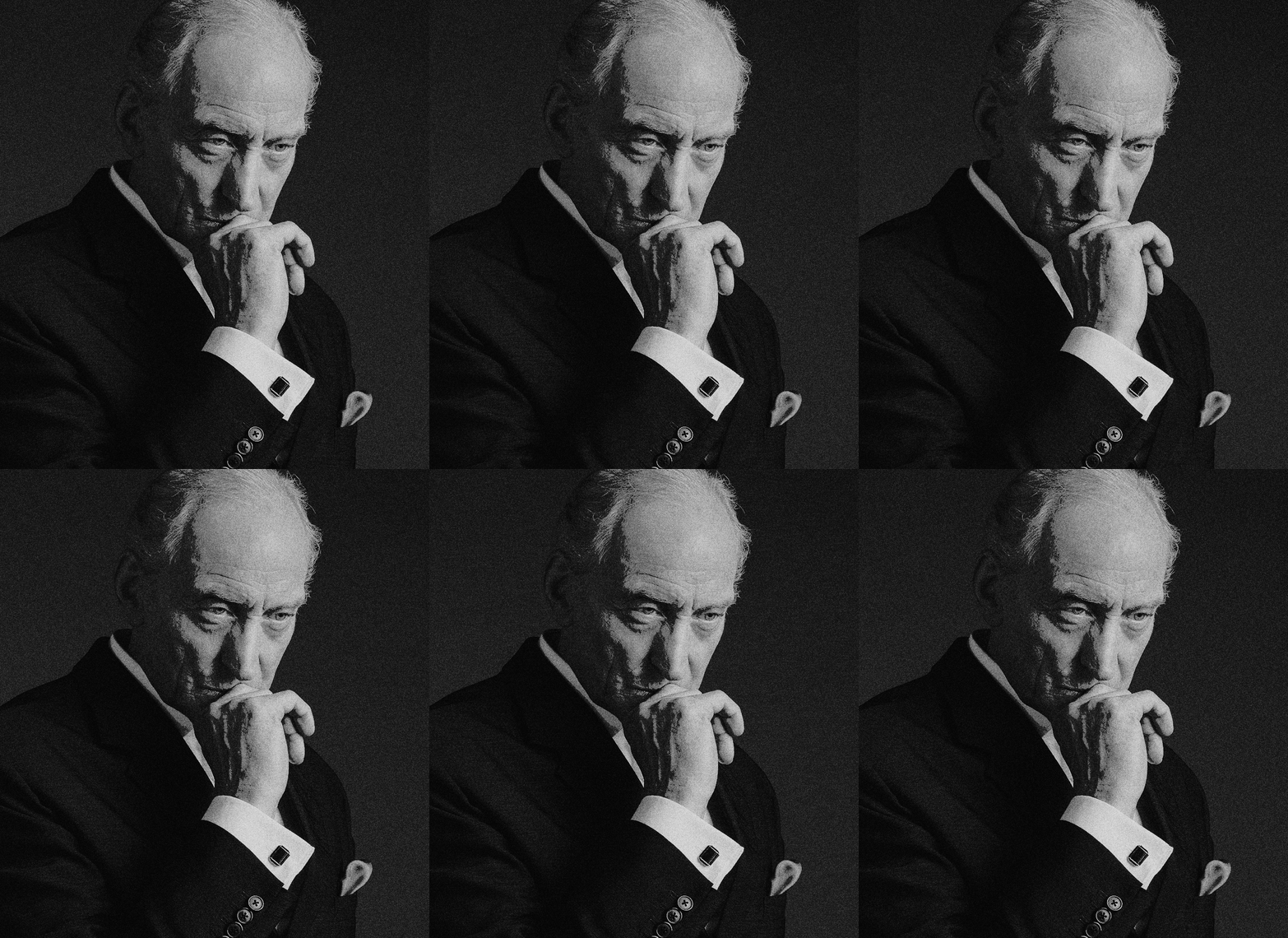
ALABASTER DOWNE; ( 1807 - 1874 ) — The Visionary — Less a man than a construct of ambition—carved from colonial wealth, Enlightenment hubris, and a deep, unshakeable belief in hierarchy. Born in 1807 in Charleston, South Carolina, to a calculating British industrialist and a Southern apothecary’s daughter, Alabaster was raised in an environment of cold intellect and controlled decay. From a young age, he showed a morbid fascination with the architecture of the human mind—not in the pursuit of healing, but in the manipulation of thought, behavior, and will. He devoured fringe science and fashionable pseudo-intellectualism: phrenology, mesmerism, magnetism. By 1834, he had founded Downe Methodical Works, a pharmaceutical house dedicated publicly to treating ailments of the “nervous disposition,” but privately to developing substances that would allow one man to quietly govern another. He was not a physician—he was an engineer of obedience. Alabaster believed society’s future depended not on freedom, but refinement. His compounds, tonics, and tinctures were tested not in controlled laboratories, but on those considered disposable—formerly enslaved individuals, debtors, and the institutionalized. He documented his results in a series of increasingly unhinged journals titled The Garden of Mind, in which he wrote of "intellectual pruning," "emotional bleaching," and the dream of creating “the perfect subject.” Though Dissension would not be born for another century, Alabaster’s empire was its soil—his doctrine of control, his disregard for autonomy, his obsession with the fractured self. By the time of his supposed death in 1874, he had amassed a fortune, a fortress of influence, and a company whose methods had become inseparable from its myth. Some say he never died. That he had his blood replaced with a mercury-based preservative. That his body was sealed, not buried, beneath the company’s oldest foundations. That even now, deep beneath the Reflection Wing, he is perfectly preserved—paused, not perished—awaiting a future finally shaped in his image.

CORNELIUS DOWNE; ( 1849 - 1917 ) — The Architect — The only surviving child of Alabaster Elias Downe out of five, raised not in the warmth of legacy but in the cold machinery of his father’s obsessions. Where Alabaster had wandered the margins of science like a fevered prophet, Cornelius returned from Harvard with steady hands and sharper vision—ambitious, calculating, and dangerously composed. Inheriting Downe Methodical Works after Alabaster’s presumed death in 1874, he found a company soaked in secrecy and rot, and reengineered it into an empire. Under his guidance, it was reborn as Downe Behavioral Sciences, shedding its apothecary origins in favor of mass-produced anesthesia, neurological suppressants, and what he coined “virtue compounds”—chemical agents marketed to correct hysteria, deviance, and disobedience. Aligning himself with the rising temperance movement, Cornelius posed as a moral visionary, standing beside ministers and social reformers while quietly expanding clinical trials on the unwanted, the institutionalized, and the discarded. In 1903, he launched Project Wainscot, a covert study into chemically-induced identity fracture; its victims—orphans, veterans, vagrants—were left in fugue states, permanently dissociated, their humanity chemically unspooled. The files were buried, relabeled, reclassified—but the implications were clear: identity could be dissolved. Though Cornelius never conceived the Dissension Procedure, he made it possible. He proved that the self was not sacred—it was structural, editable, corruptible. By the time of his death in 1917, he had fathered four children, each raised under strict codes of conduct, psychological observation, and carefully monitored schooling. One—his youngest son—would rise to take the helm of the company after his death, inheriting not just Cornelius’s name, but his doctrine of control, cementing the Downe bloodline as not merely corporate royalty, but the architects of modern obedience.
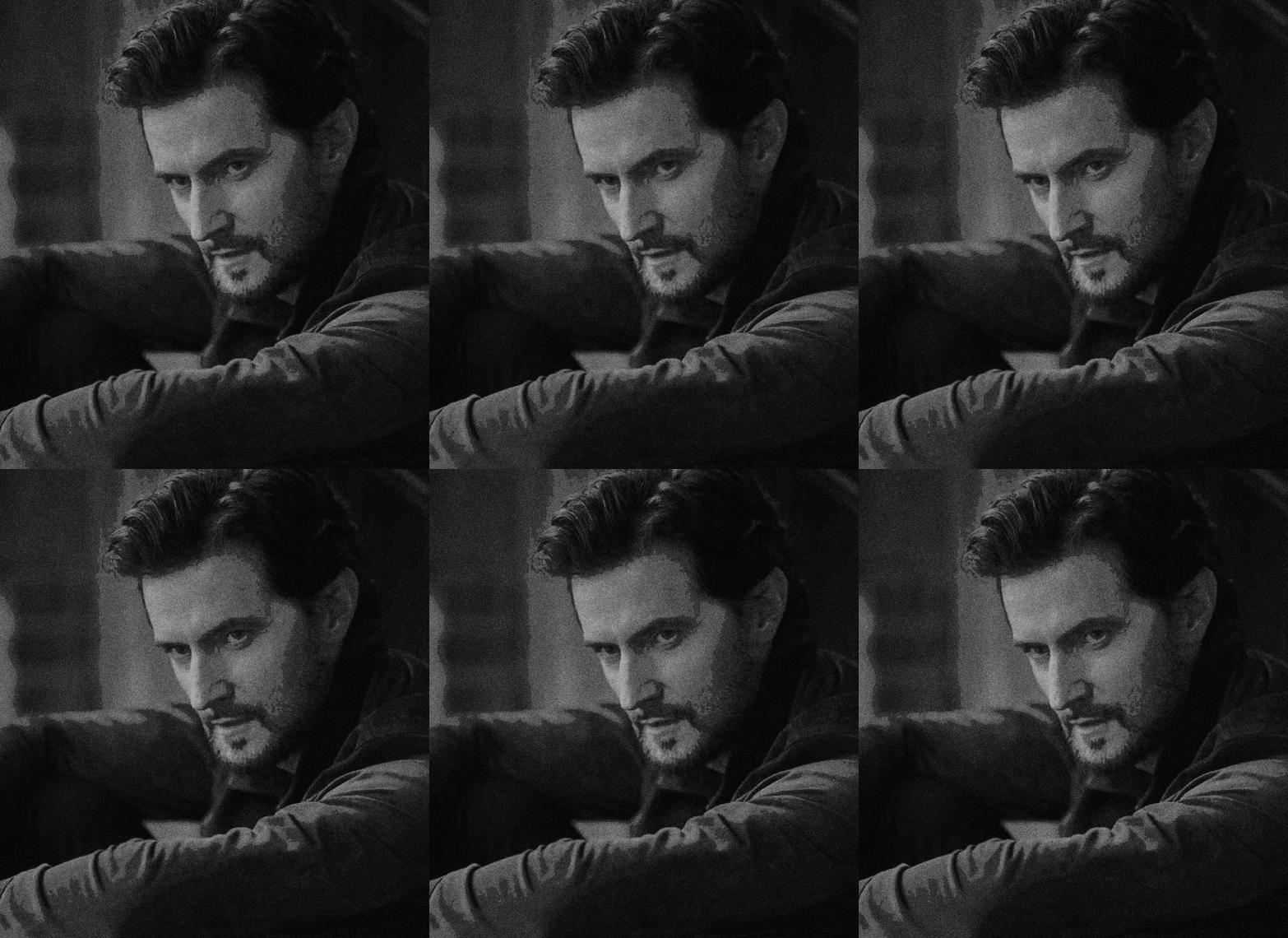
DESMOND VOLNER-DOWNE; ( 1892 - 1961 ) — The Curator — Where Alabaster dreamed and Cornelius built, Desmond Volner-Downe refined. Born in 1892, the youngest of Cornelius’s children and the only one his father deemed “pliable enough for legacy,” Desmond came of age in a world already shaped by Downe ambition—a world of silence, hierarchy, and inherited control. But Desmond saw something his father and grandfather never did: the necessity of image. While Alabaster believed in vision and Cornelius in infrastructure, Desmond mastered presentation. When he assumed the role of CEO in 1918, following Cornelius’s death, he inherited a company rooted in secrecy, ethically scorched, and heavy with the weight of Project Wainscot. Desmond did not erase this legacy—he repackaged it. His transformation of the company was accelerated by his marriage to Loretta Volner, a French-Jewish and Afro-Caribbean behavioral theorist, whose writings on public trust and cognitive harmony reshaped not only internal doctrine but external perception. Their union symbolized a calculated shift: from brutalist secrecy to institutional polish, from coercion to curated compliance. Under Desmond’s leadership, Downe Behavioral Sciences partnered with government health agencies, launched wellness campaigns, and constructed facilities designed to comfort rather than intimidate. Inside, however, research into behavioral control continued—smoother, quieter, better dressed. By the late 1950s, Desmond’s brilliance began to dim. He grew paranoid, erratic, and prone to vivid hallucinations, later diagnosed as general paresis, a neurodegenerative condition brought on by untreated syphilis—an affliction considered taboo among elites, and one that struck at the very root of his crafted image. He was quietly moved into long-term care within a private wing of the Volner Building. In his absence, his only daughter, Calla Volner-Downe, assumed leadership. While his daughter governed as the company’s first female CEO, Desmond gradually withered into silence—his once-formidable presence unraveling in private halls and forgotten corners of his empire—until his death in 1961 at the age of 69.

CALLA VOLNER-DOWNE; ( 1920 - 1984 ) — The Executor — The only daughter of Desmond Volner-Downe and Loretta Volner, Calla was raised not beside power but inside its marrow—a child bred for legacy, fluent in silence, calculation, and exactitude. Where her father performed elegance and her mother rewrote the company’s public voice, Calla listened, learned, and absorbed. She studied behavioral neuroanalytics in Zurich before most women were permitted boardroom presence, and when Desmond’s mind began to deteriorate in the late 1950s, she stepped into the role of CEO without ceremony, the first woman to hold the title in the company’s history. She did not expand, advertise, or charm—she distilled. Under Calla, Volner-Downe Inc. became quieter, more disciplined, surgically precise. She stripped the company of theatricality and emotional indulgence, dissolved entire departments focused on morale, and implemented biometric compliance protocols that turned work into ritual. Her leadership was architectural—angular, bloodless, unyielding. Gone were the marble fountains and staged photographs; in their place: gesture codes, unadorned corridors, and policy so seamless it felt like air. Calla never married, never wanted children, and left behind no direct heirs—only systems, files, and a silence that outlasted her. Upon her death in 1984, the title of CEO passed to her younger cousin, a third-generation Volner-Downe through her mother’s line, chosen not for charisma or innovation, but for their proven ability to maintain the structure exactly as it was. She did not invent Dissension, nor did she seek to—but those who study the company’s history often say the soil was prepared under her: a culture in which silence was valor, emotion a malfunction, and obedience no longer required enforcement—it was simply assumed.
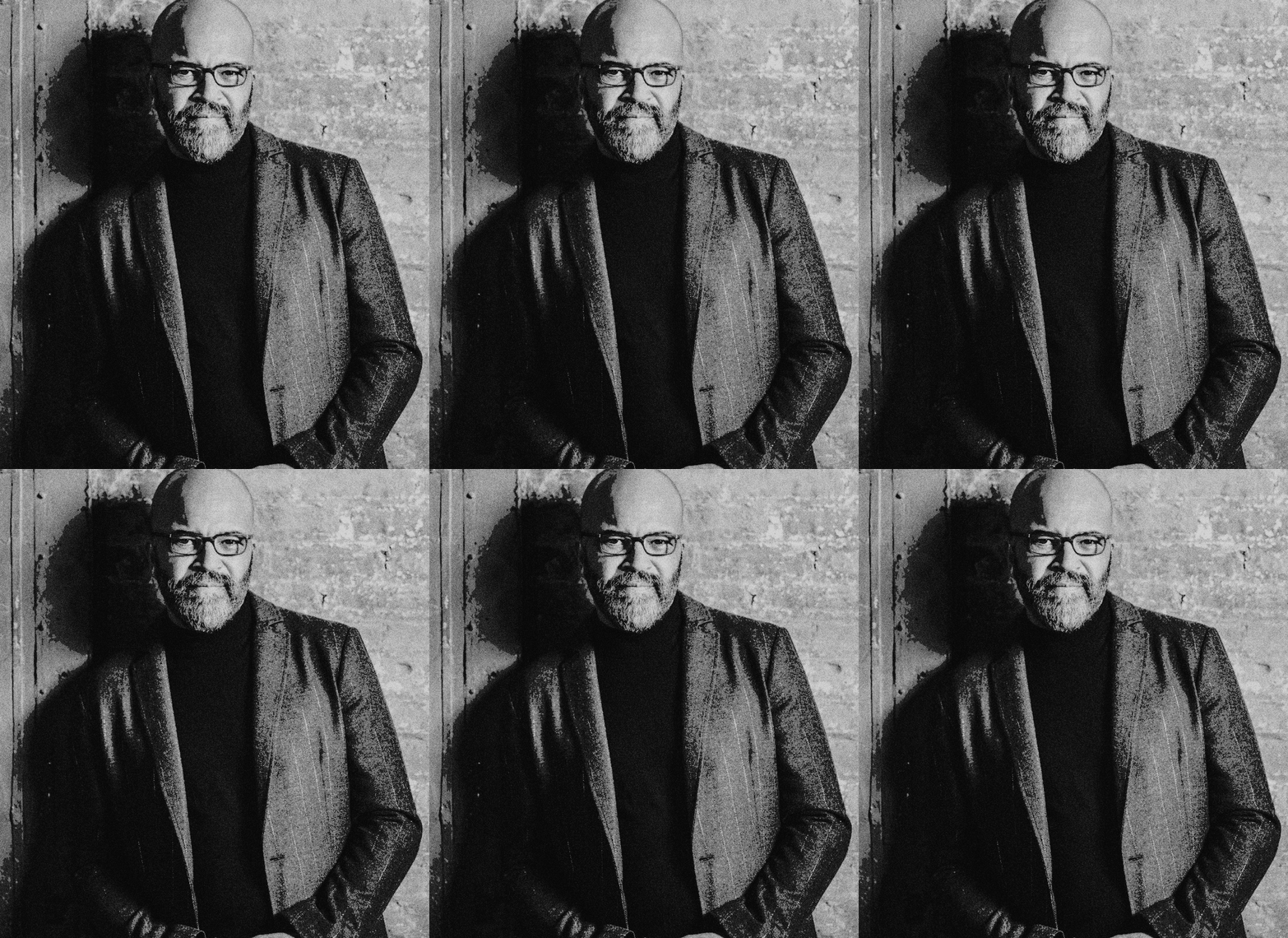
SEBASTION VOLNER-DOWNE; ( 1968 - ) — The Revivalist — OPEN. Calla’s third cousin through the Volner line—raised in the shadow of her precision but never sculpted by it. Where she governed with cold clarity, Sebastian arrived with fervor, inheriting power after her death in 1984 not as the chosen heir, but as the last viable option. Many in the boardroom whispered that he lacked her restraint, her rigor, her quiet command—that he was a man of spectacle born into a lineage of silence. Some believed his appointment was a placeholder, a gesture toward continuity rather than control. But Sebastian did not inherit power to maintain it—he sought to resurrect it. Obsessively devoted to Alabaster Elias Downe, whom he viewed less as an ancestor and more as a prophet, Sebastian devoted his life to restoring the founder’s lost ideology. He collected redacted journals, commissioned replicas of Alabaster’s lost instruments, and built his private office as a shrine—dustless, symmetrical, sealed to all but him. His most visible and enduring contribution was the creation of Downe’s Hollow, a coastal company town on Long Island conceived as a living cathedral to corporate obedience. A pastel utopia with synchronized bells and carefully programmed comfort, it became a quiet, curated reality—one where surveillance lived in the wallpaper and ideology was stitched into school curriculums. While his predecessors wielded control like a scalpel, Sebastian wrapped it in nostalgia, myth, and chrome. His critics argue he brought nothing new, only decoration—ornament over innovation, ceremony over evolution. And yet he has ruled longer than any Downe before him, hidden behind curated appearances and internal proxies, his grip more enduring than visible. He has children, but only one heir: Dr. Elodia Volner-Downe, a glacial-eyed successor trained in silence and spectacle, who studies her great-great-grandfather’s writings like scripture. The world believes Sebastian was the weakest of them all. He intends to prove them wrong by ensuring his bloodline is the one that completes the doctrine.
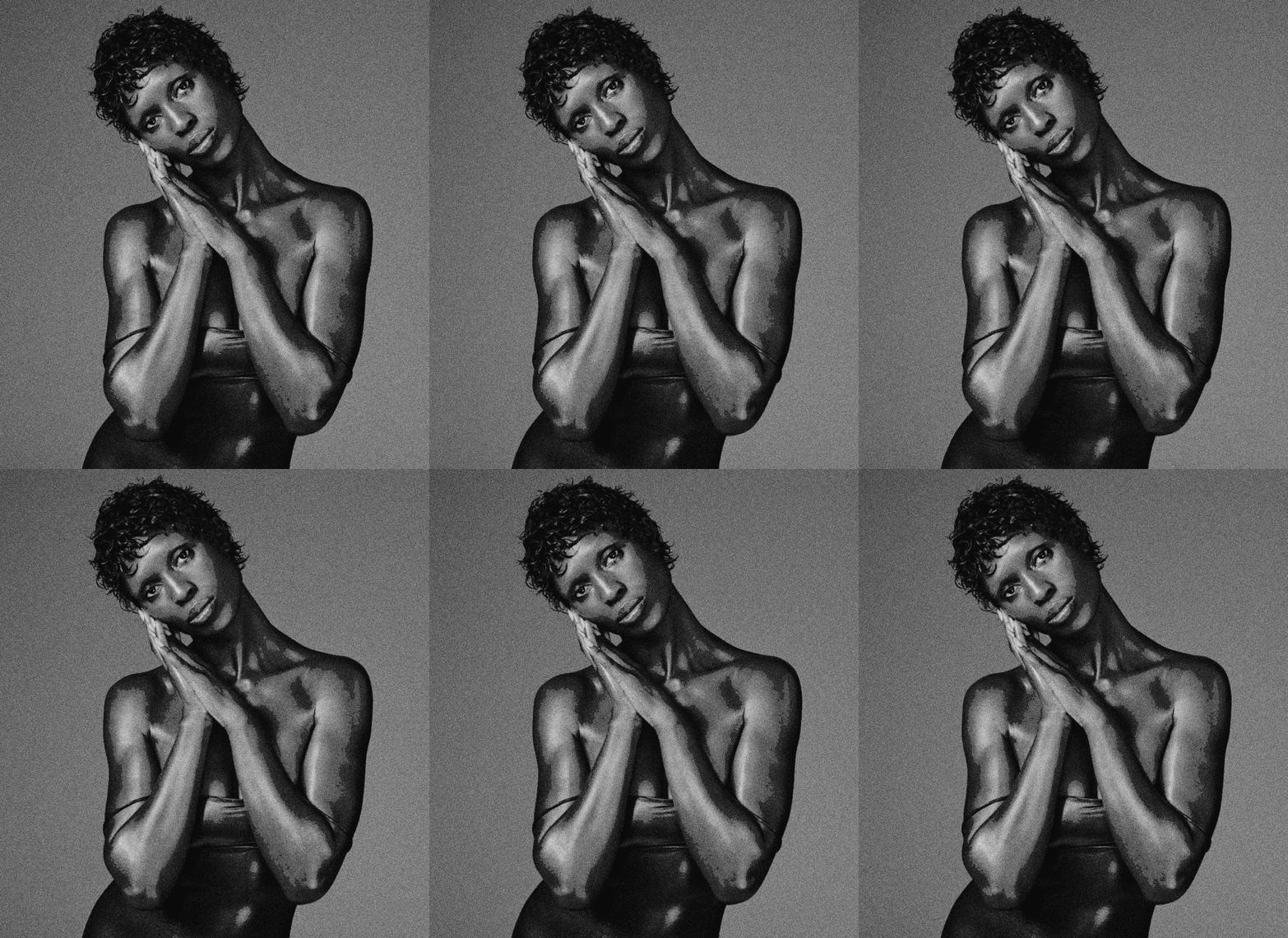
DR. ELODIA VOLNER-DOWNE; ( 1986 - ) — The Heir — TAKEN. Beneath a portrait of Alabaster and the weight of a name that never once asked her consent, things have never been so simple for Elodia. The first daughter of Sebastian Volner-Downe out of six children ( and other's she doesn't know about ), she was raised in to be polished to perfection—taught to speak only when the words were rehearsed, to walk like legacy was stitched into her spine. Brilliant and impossibly composed, Elodia became everything the company needed: the embodiment of grace under scrutiny, of obedience shaped into elegance. She earned dual doctorates before thirty, learned to write in code and in policy, and was paraded through symposiums as the future of Volner-Downe Inc. But beneath the speeches and the smiles, Elodia is haunted. The company unnerves her—the rituals, the lineage, the way rooms seem to remember things no one speaks aloud. She has stood in Downe’s Hollow and felt the hum of surveillance under her skin, listened to her father recite Alabaster’s words like prayer and felt herself go still with dread. She is not close to him. Not really. There is affection, but it is formal, brittle, filled with everything they cannot say. And though she does not believe in what he believes—does not worship the Downe name, does not find beauty in obedience—she remains dutiful. Because she is terrified of what will happen if she isn't. She knows the company doesn’t forgive deviation; it swallows it. So she plays the role. Smiles on cue. Studies the faces of the dead men in the boardroom until she forgets her own. Everyone believes she is next. And she is. However part of her wonders—quietly, always at night—if the greatest thing she could ever do for the legacy they built… is end it.
Executive Liaison Corps,
The Executive Liaison Corps of Volner-Downe Inc. functions as the company's internal nervous system—composed of senior counsel, directive envoys, and strategic advisors who translate the will of the CEO and board into motion. These operatives do not influence—they implement, ensuring that every directive, revision, and silence descends swiftly through the proper channels. Assigned to oversee discrete sectors of the organization—from legal architecture and ethics compliance to interdepartmental containment and infrastructural messaging—they are embedded deep within the company’s most vital organs. They report directly to the executive chamber, bypassing all standard protocol, and their word carries the weight of undisclosed conversations. They do not debate, they do not delay. To be contacted by the Corps is to be corrected before you knew you erred. They are the articulated will of power, made administrative flesh.
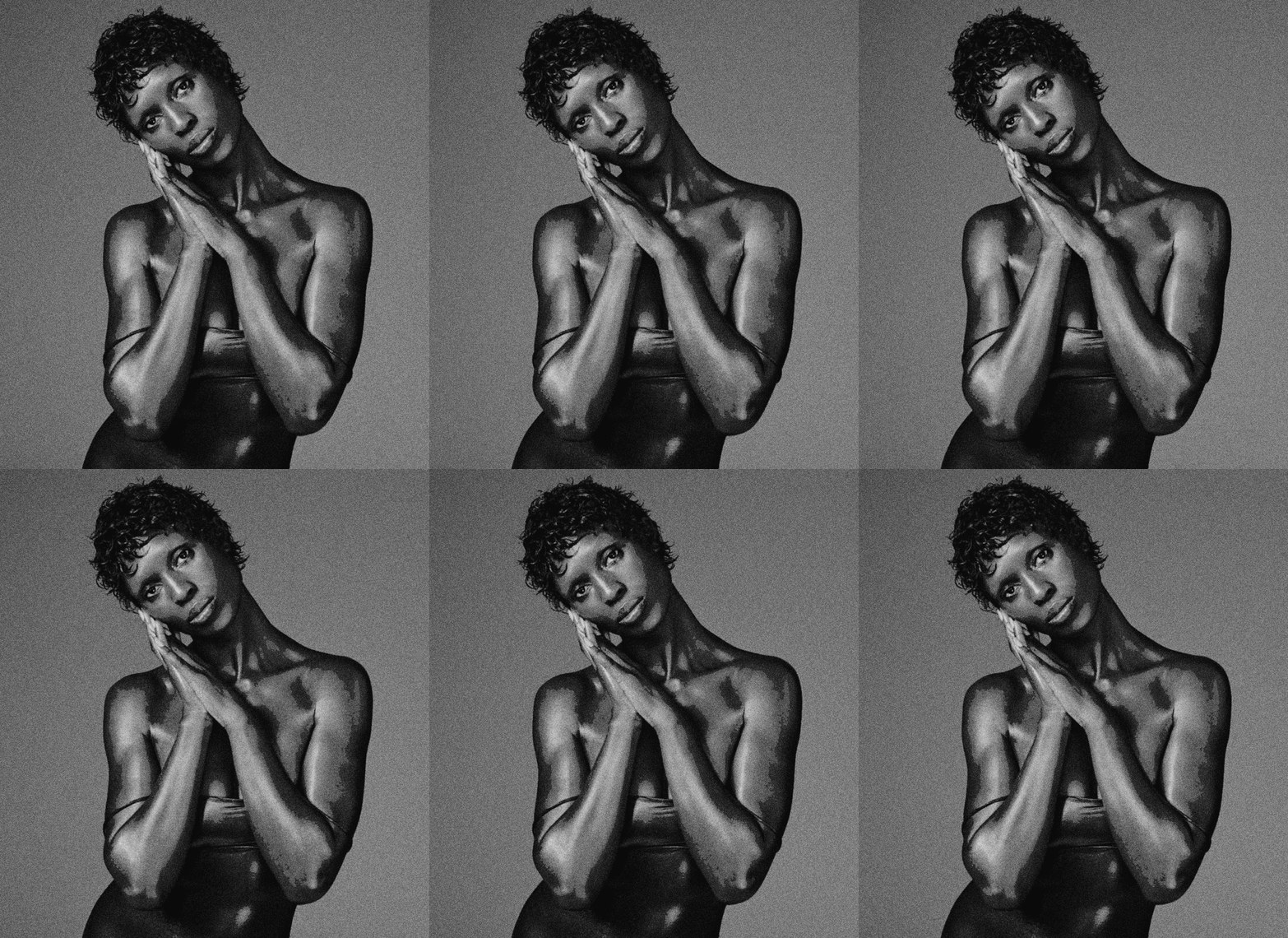
DR. ELODIA VOLNER-DOWNE; THE CHAIR OF INTERNAL CONTINUITY.

OPEN; THE DIRECTOR OF COGNITIVE OPERATIONS.

OPEN; THE PROVOST OF STRUCTURAL HARMONY.

OPEN; THE MINISTER OF TEMPORAL INTEGRITY.

OPEN; THE ARCHIVIST PRIME.

OPEN; CHIEF INTERFACE LIAISON.

OPEN; DISSENSION SURGEON.

OPEN; REGIONAL OVERSEER.

OPEN; ETHICS REFRACTOR.
MANAGERS,
The High-Level dedicated Managers of the Floor of Dissent are not overseers in the traditional sense—they are containment artists, tasked with maintaining the sacred fracture between identities deep below the polished surface of Volner-Downe Inc. On this floor, where only the most unstable or essential Innies are stationed, reality is not shared—it is partitioned. Each work division is sealed from the next by design, with no clocks, no names, no knowledge of parallel function. The managers orchestrate this disconnection with clinical grace, ensuring no cross-contamination of purpose or memory. They are never severed themselves; to monitor the broken, they must remain whole. Trained in adaptive compliance theory and cognitive drift suppression, they walk freely among the splintered minds, cataloging deviations, suppressing patterns, and maintaining a rhythm so precise it borders on ritual. In rare cases of structural emergency, they may activate the Overtime Protocol—a controlled breach that wakes an Innie into the Outie’s world, often leaving both disoriented and fractured. It is not mercy. It is procedure. To them, the floor is not a workplace, but a living organism—and they are its immune system, quietly eliminating infection before anyone knows it began.
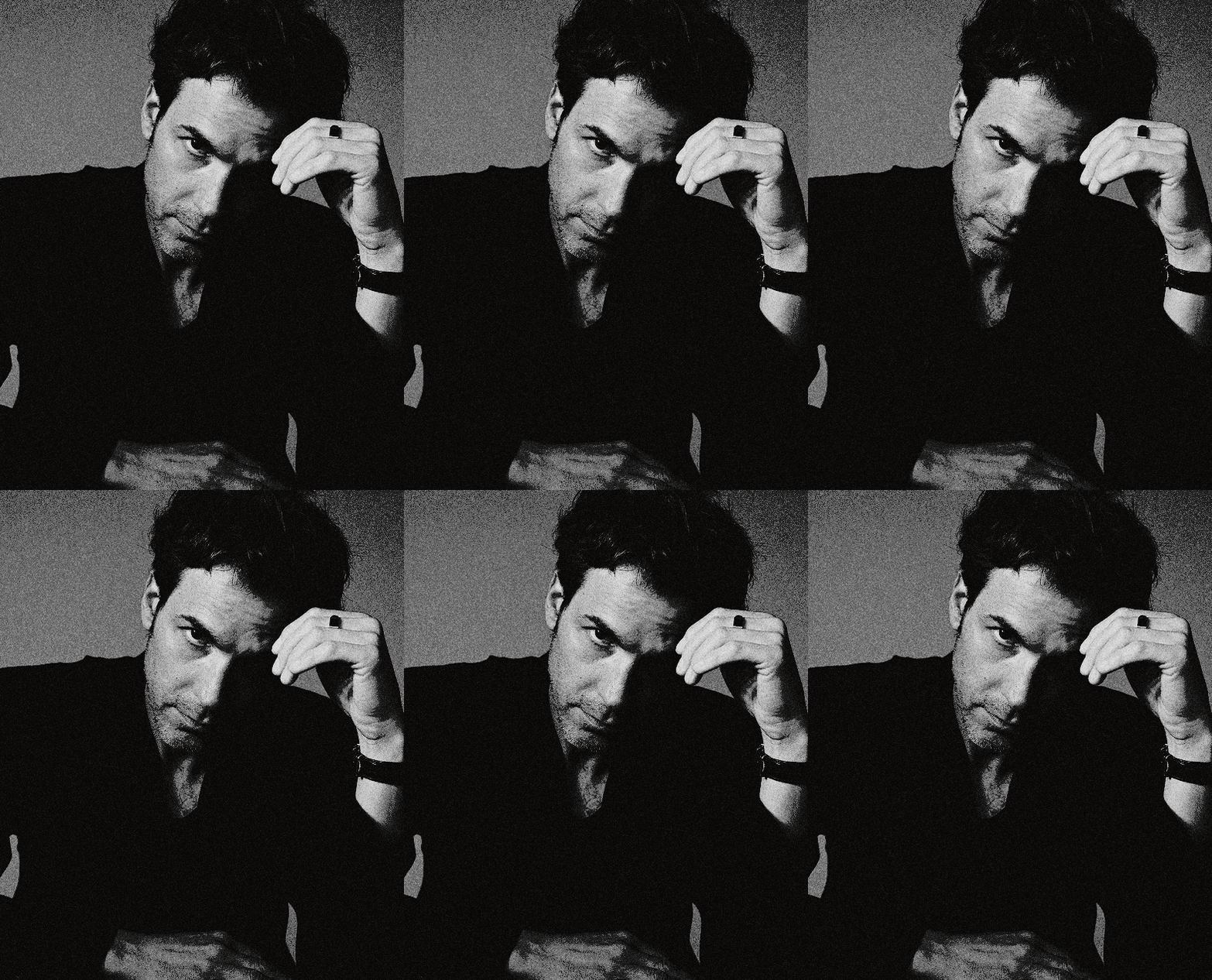
NICOLÁS CÁRDENAS; THE WARDEN.

OPEN; THE SHEPARD.

OPEN; THE CUSTODIAN.
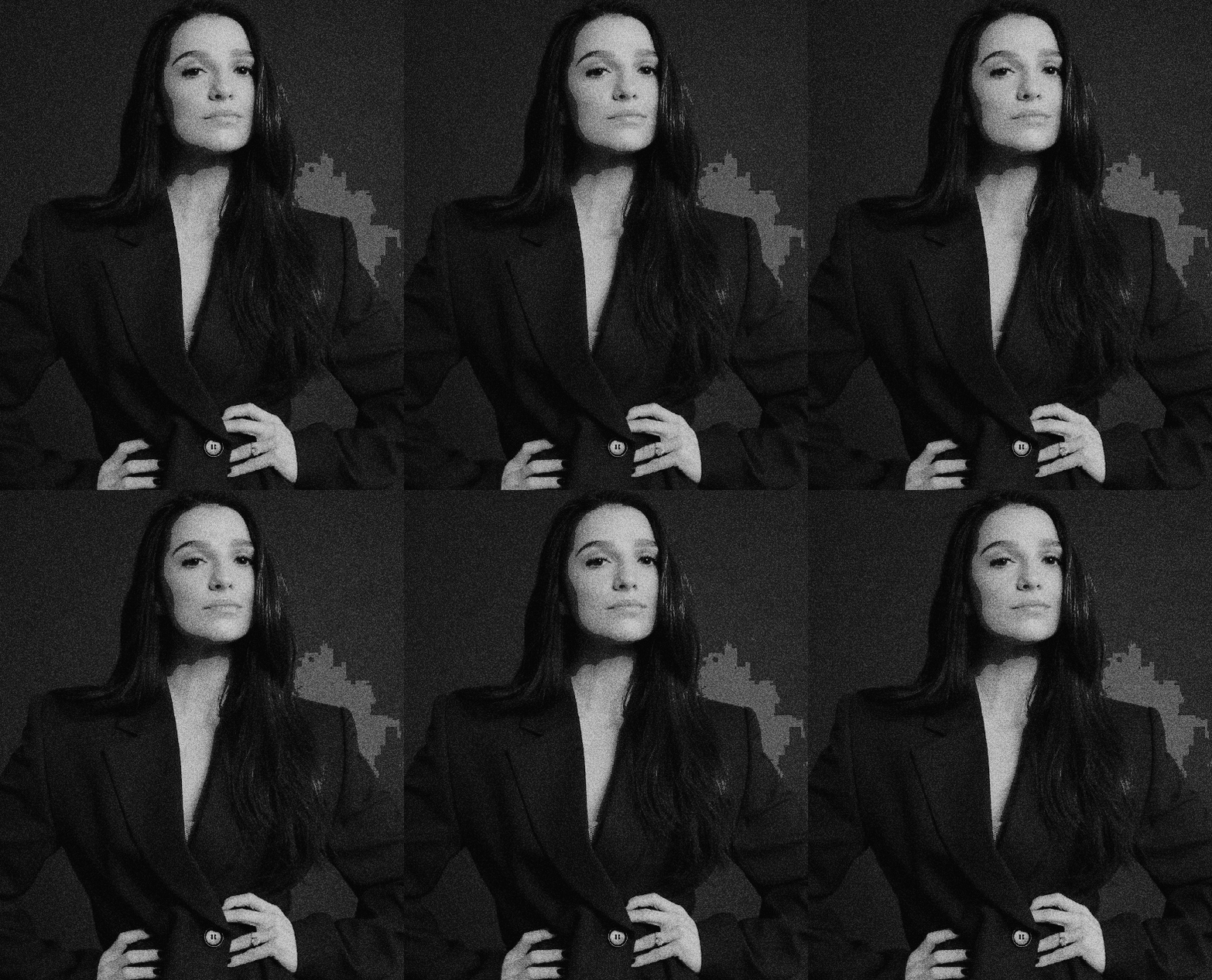
SERENA QUIMBY; THE LIAISON.

OPEN; THE SCRIBE.

OPEN; THE ANALYST.

RESERVED; THE HEAD WATCHDOG.

OPEN; THE SECOND WATCHDOG.
CIVILIANS,
The civilians of Downe’s Hollow live in curated symmetry—teachers, shopkeepers, artists, analysts—framed by white fences, trimmed hedges, and the soft, unspoken gravity of Volner-Downe Inc. Some are single, quietly employed by the company or adjacent to it, others bound by marriage to those who vanish into the tower each morning and return without memory. Many have found comfort in routine: evening porch lights, synchronized radio, the assurance that life here is orderly and watched. But beneath the pastel calm, tensions coil. Some speak in whispers behind closed doors, question the hum at the town’s edge and the concept of choice itself. A few write letters they never send. Others simply stare too long at the Welcome Sign, wondering when, exactly, they agreed to stay. In Downe’s Hollow, peace is possible—but only if you stop asking why it feels so staged.
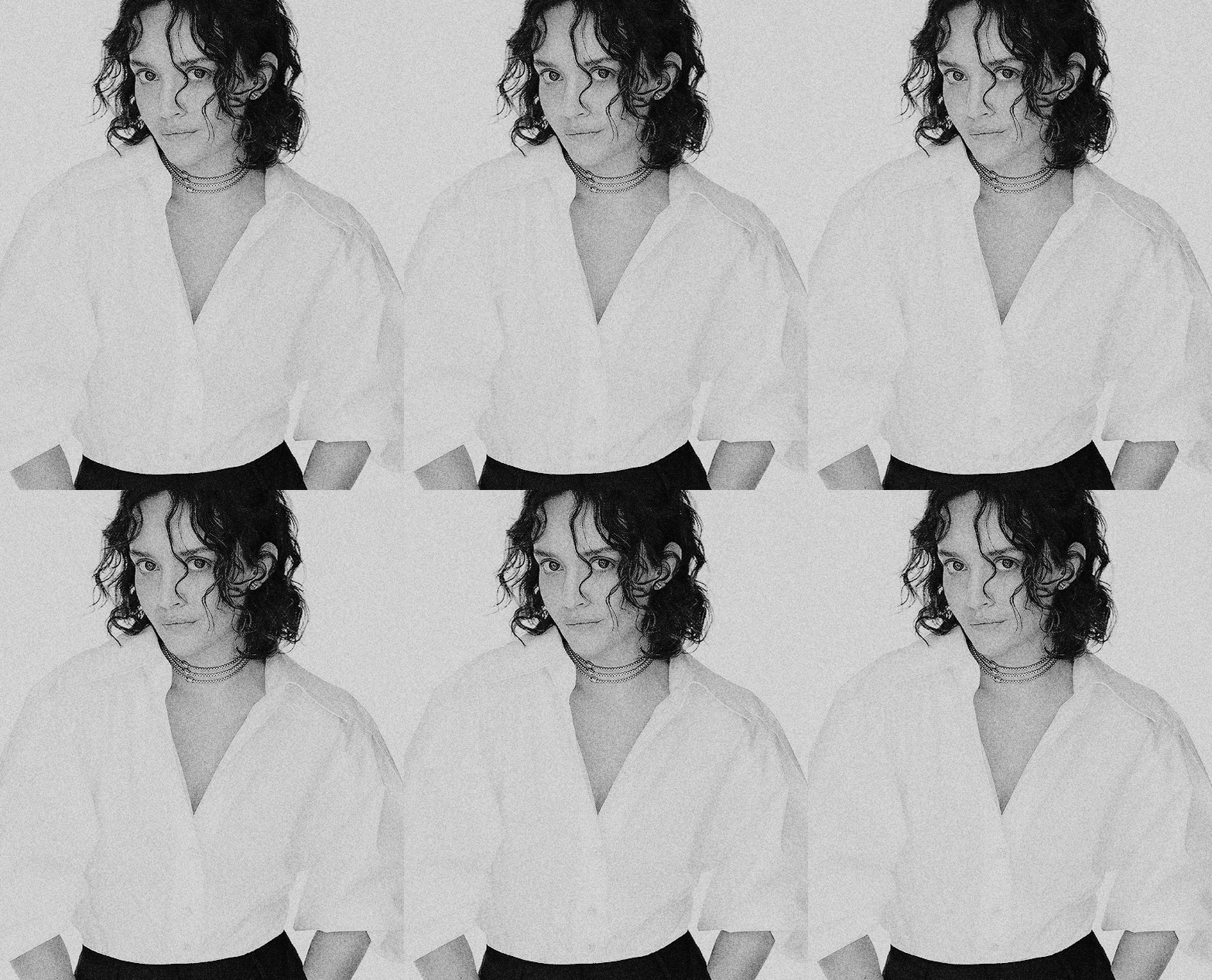
ROWAN VALENTINE;

MANON MOVSKA; THERAPIST.
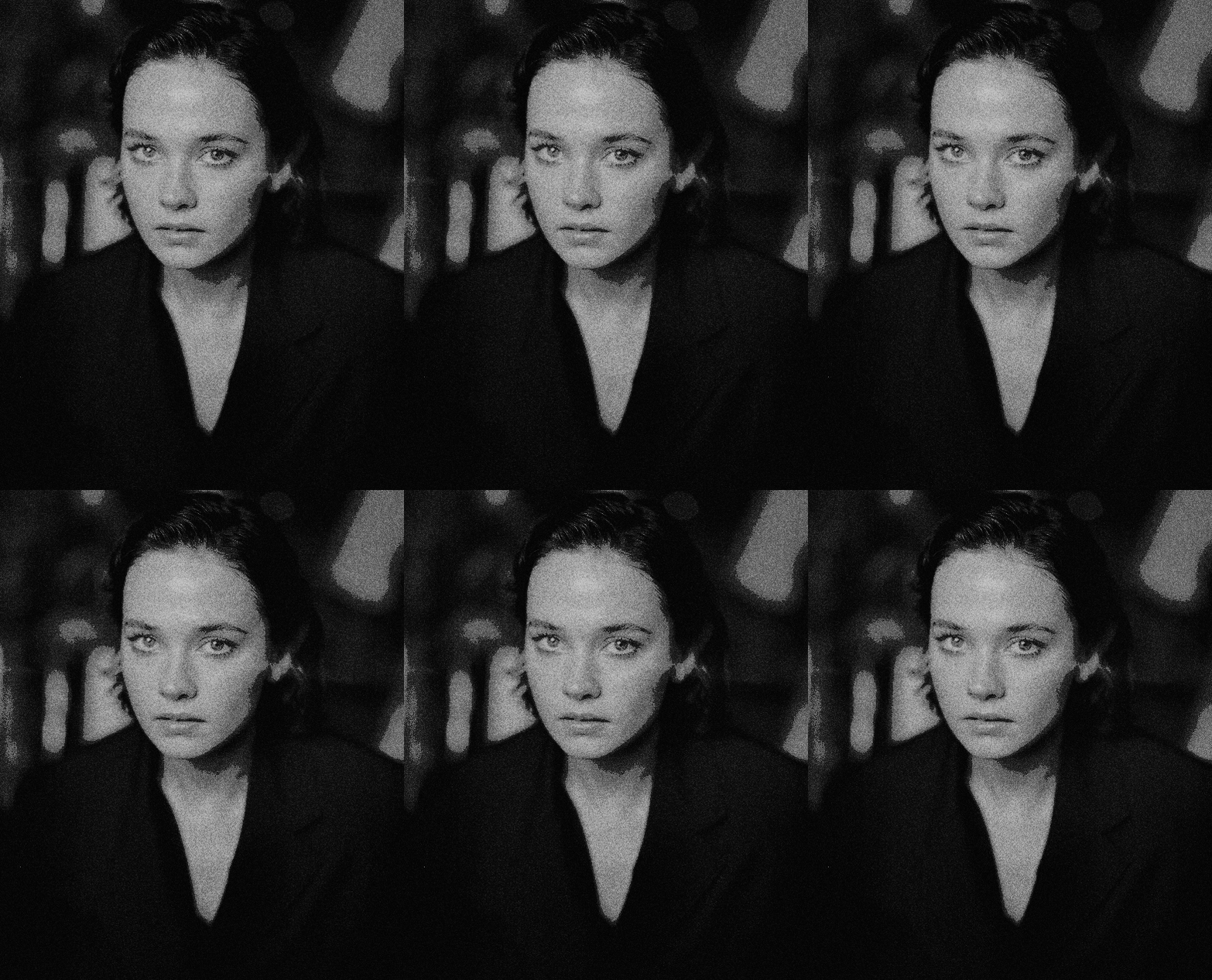
GUINEVERE ROSENFELD; BARISTA & VOLUNTEER ASSISTANT.

OPEN;

RESERVED;

OPEN;

OPEN;

OPEN;

OPEN;

OPEN;

OPEN;

OPEN;

OPEN;

OPEN;

OPEN;

OPEN;
DISSENCION EMPLOYEES,
The employees assigned to the Floor of Dissent wake each day beneath halogen skies, their minds halved, their histories severed, their roles defined only by repetition. They file into the Behavioral Wellness Team, the Data Reconciliation Unit, the Document Memory Stabilization Office, Interpersonal Surveillance, and beyond—each one performing tasks with immaculate posture and no understanding of purpose. They log numbers, correct syntax, flag interactions, redact names no one remembers. Even in the Reflection Wing, where echoes of memory pulse against glass for the troubled, no one dares ask what it means. Only the Volner Nutrition & Sustenance Development Team knows their work sustains the system—they test flavorless bars, balance chemical intake, and keep hunger from becoming thought. The rest continue forward, tethered to routine, haunted by glimpses of sky in dreams they’re not supposed to have. They do not know the shape of their labor, only that it must be done. And in the absence of meaning, obedience becomes scripture. After all, it's all their Innies know.
behavioral wellness department

RESERVED; AFFECTIVE COMPLIANCE MODERATOR.

OPEN; REINFORCEMENT INDEX COORDINATOR.

OPEN; GRATITUDE INDEX COORDINATOR.

OPEN; EMOTIONAL REDIRECTION FACILITATOR.
DATA RECONCILIATION department

OPEN; SEQUENCE IRREGULARITY NOTATOR.

OPEN; PATTERN DRIFT AUDITOR.

SCARLETT VALENTINE; CODE HARMONIZATION OPERATOR.

OPEN; STATISTICAL CLEANSING AGENT.
memory stabilization department

OPEN; LANGUAGE TEMPERANCE EDITOR.

OPEN; NARRATIVE REPETITION ANALYST.

OPEN; SUBTEXT FILTRATION CLERK.
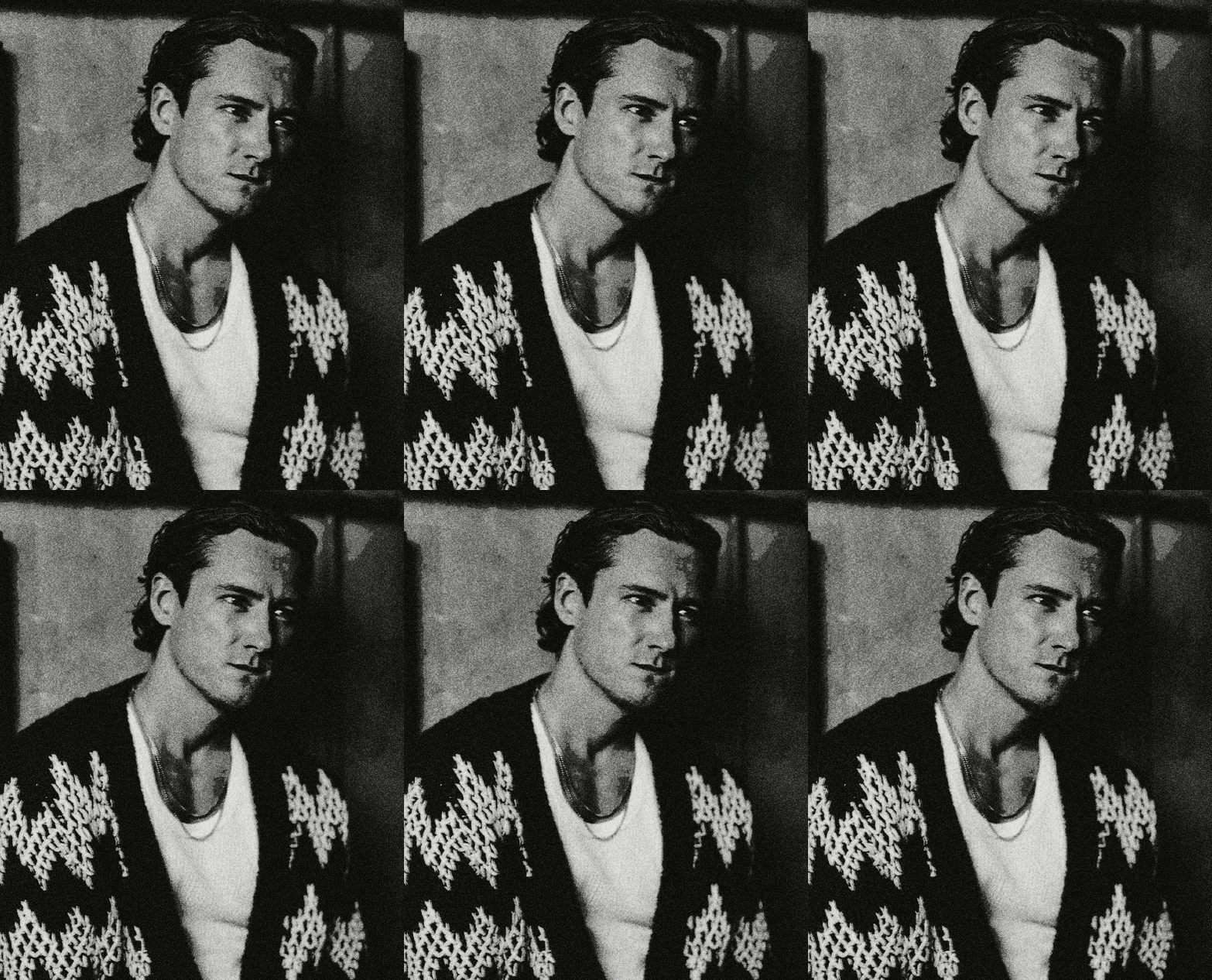
JUDE EASTERLIN; LEXICAL STABILITY TYPIST.
SURVEILLANCE INTEGRITY DEPARTMENT

OPEN; RAPPORT DEVIATION SPECIALIST.

OPEN; SILENT BEHAVIOR ANALYST.

OPEN; GESTURE CATALOGUER.

OPEN; CONVERSATIONAL DRIFT MONITOR.
OFFICE OF HOURLY PRESERVATION

OPEN; TEMPORAL RHYTHM TECHNICIAN.

OPEN; INTERVAL CONDITIONING OFFICER.

OPEN; CHRONO-LOG COMPLIANCE CLERK.

OPEN; ELEVATOR CYCLE SUPERVISOR.
MNEMONIC SANITIZATION BUREAU

OPEN; RESIDUAL TRACE EXAMINER.
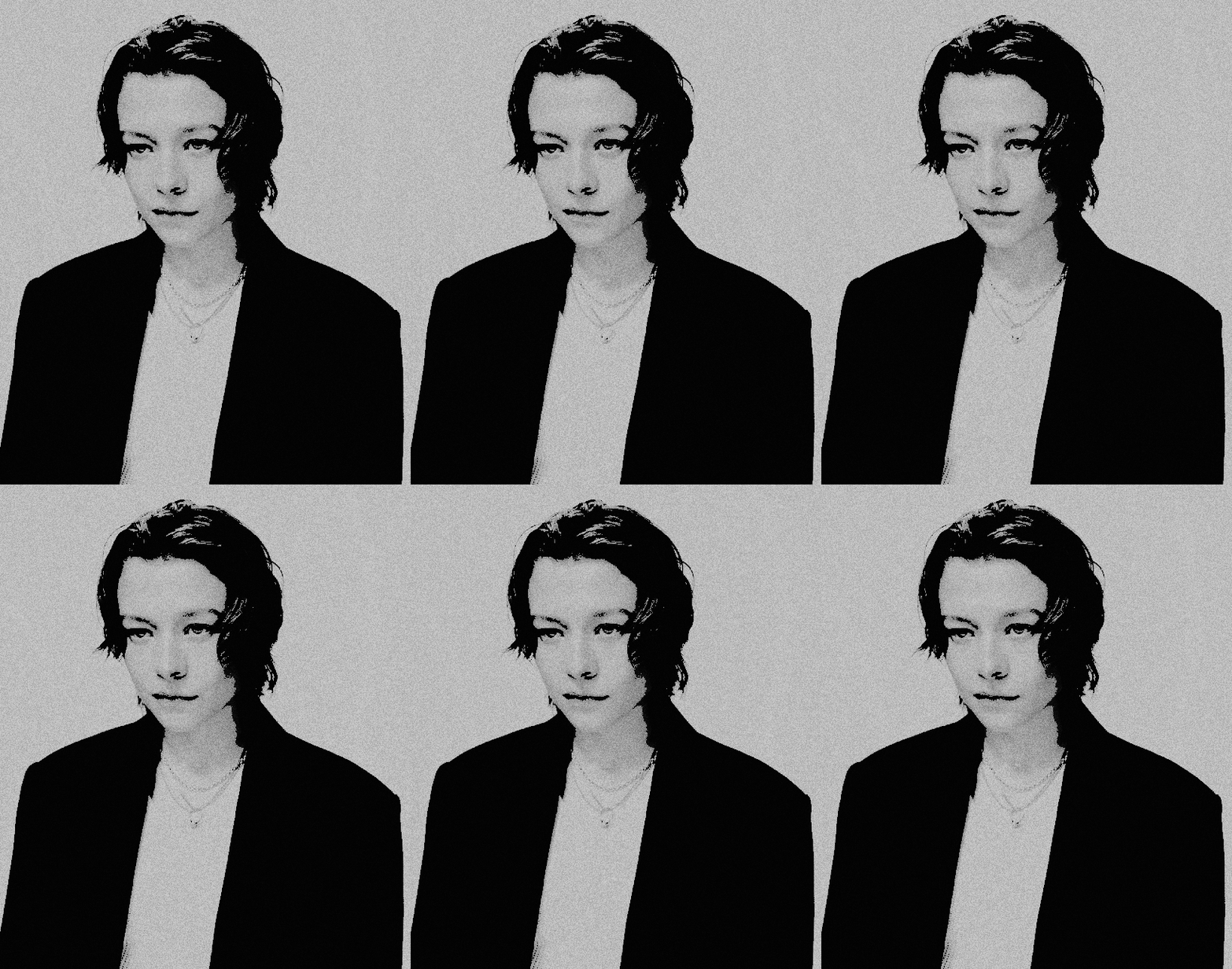
MARLOWE COVINGTON; SENSORY TRIGGER AUDITOR.

OPEN; RECALL SUPPRESSION FACILITATOR.

OPEN; SYMBOLIC CONTAMINATION SPECIALIST.
SOCIAL CONDITIONING DEPARTMENT

OPEN; AFFIRMATION SCRIPT ENGINEER.

OPEN; PEER COMPLIANCE MODELER.

OPEN; CELEBRATION DESIGN TECHNICIAN.

OPEN; ISOLATION RESPONSE ASSESSOR.
VOLNER NUTRITION & SUSTENANCE DEV DEPARTMENT

OPEN; PALATABILITY NEUTRALIZATION SPECIALIST.

OPEN; CALORIC MOOD ANALYST.

OPEN; INGESTION MONITORING TECHNICIAN.

OPEN; RITUAL CONSUMPTION COORDINATOR.
resistance,
Scattered at the edges of sanctioned silence are those who resist Volner-Downe Inc.—fractured doctors who once authored compliance protocols and now live in motels under false names, former scientists who fled the Reflection Wing with redacted files stitched into their coats, and civilians who whisper of wholeness like it’s heresy. Some are severed employees who underwent the illegal reverse procedure, emerging with minds sutured unevenly—haunted by twin memories that were never meant to coexist. They speak in riddles, weep in foreign languages, or vanish entirely. A few left messages behind—scratched into walls, burned into microwaves, etched beneath fingernails: “I was two. I remember both.” Others simply died, undone by the weight of knowing and the affects on their bodies. Their movement is not organized—it is a pulse, erratic and growing, stitched together by grief, by guilt, by the terrible truth that the self was never meant to be edited. And still, they persist—proof that some fractures refuse to stay closed.
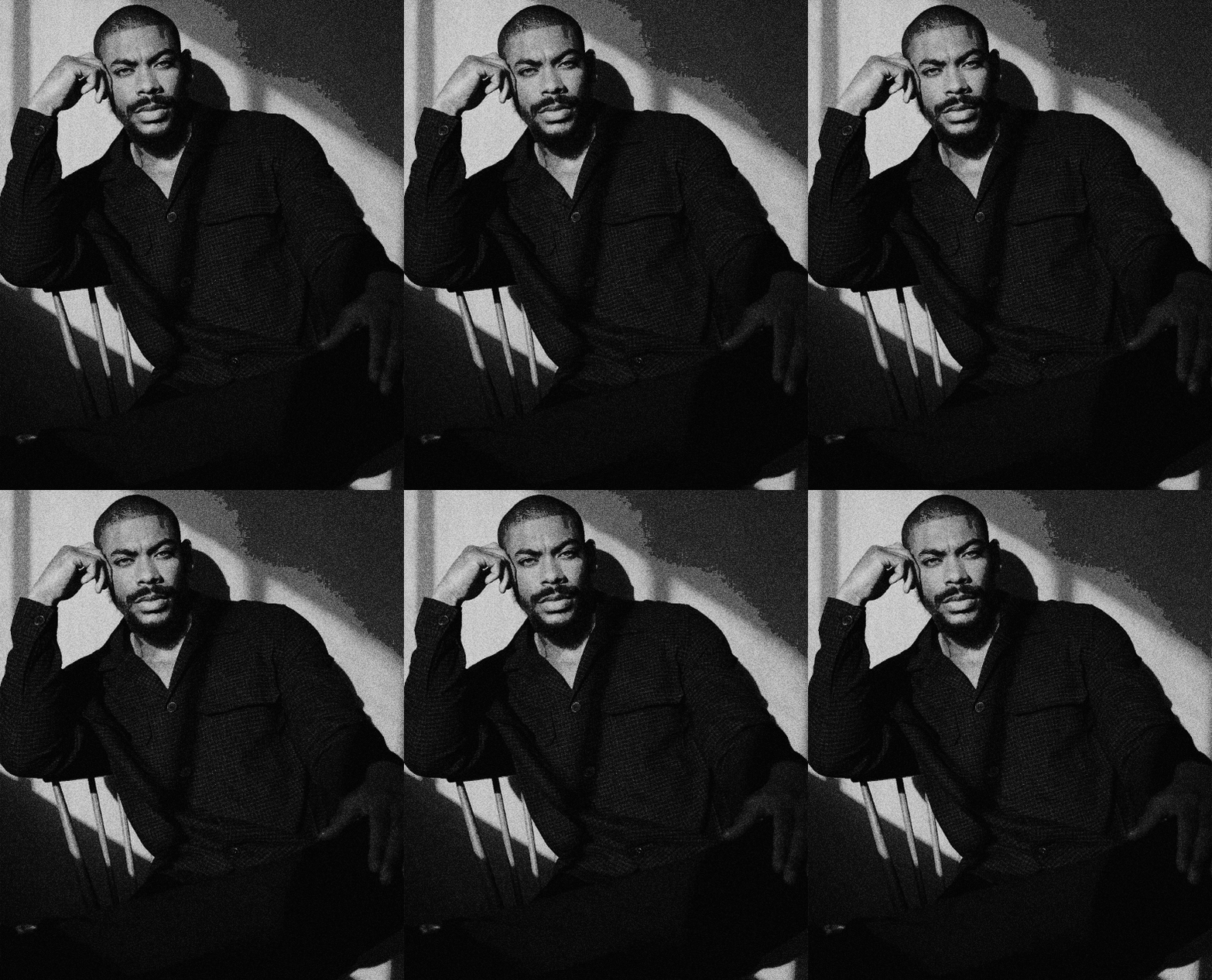
VINCENT HARROW; REVERSAL SURGEON.

OPEN; SIGNAL GHOST.

OPEN; EQUATOR SCRIBE.

OPEN; PATTERN BLEED CARTOGRAPHER.

MANON MOVSKA; EMOTIONAL RECOVERY ARCHIVIST.

OPEN; NULL IDENTITY FORGER.

TATUM S. ROOK; MEMORY SMUGGLER.

RESERVED; COMPLICITY TRACKER.
WANTED CONNECTIONS FORM,
⸻ 𐄁 𝗩𝗢𝗟𝗡𝗘𝗥-𝗗𝗢𝗪𝗡𝗘 𝗜𝗡𝗖. // 𝗜𝗡𝗧𝗘𝗥𝗣𝗘𝗥𝗦𝗢𝗡𝗔𝗟 𝗥𝗘𝗟𝗔𝗧𝗜𝗢𝗡𝗦 𝗙𝗜𝗟𝗘 𝗢𝟱𝟭-𝗥
RESTRICTED ARCHIVE. ALL FIELDS MANDATORY. CONNECTION SPECIFICATIONS MUST BE SUBMITTED IN FULL.(
╰── All requests subject to internal compatibility review. Unauthorized speculation is discouraged.╭── ⫸ [ PRIMARY CHARACTER NAME ]
▸ Known Within System As ( INSERT APPROVED FACE ENTRY ):
▸ Functional Role Within Hollow:
▸ Seeking Identified Link To: ( e.g., estranged sibling, former handler, co-parent, ex-supervisor )
▸ Ideal Face Catalogue Suggestions ( suggested FCs ):
▸ Estimated Chronological Range ( age range ):
▸ Emotional Designation ( optional ):
▸ Narrative Origin Point ( how and when did this connection begin? ):
▸ Circumstantial Drift ( why are they no longer present or emotionally involved? ):
▸ Desired Outcome ( romance, familial, enemies, etc ):
▸ Observational Keywords ( 3-5 words that hint at mood, tone, or internal narrative flavor ):
▸ Did they undergo the Dissension Procedure? Or the Reversal? ( Yes / No ):
▸ Requesting Clearance For Direct Messaging? ( Yes / No ):╰── Addendum ( use this section for any thematic notes, aesthetic comparisons, narrative skeletons, or softworld building suggestions. ):╰── Submitted By: [ TUMBLR USERNAME / ALIAS ]( Connection forms are reviewed weekly by the Department of Narrative Integrity._ Please allow for emotional discrepancies and temporal backfill. All relationships are subject to memory adjustment protocol. )